
Flavors of the North End: Produce
From pushcarts to storefronts: how Italian immigrants turned Boston’s produce trade into family businesses.
Jump to a story: Italians Discover Boston’s Produce Markets · Pastene: A North End Success Story
Italians Discover Boston’s Produce Markets
Italian immigrants to the North End were just a short walk to the chaotic bustle of Faneuil Hall and Haymarket areas. This was not the market in the village square like back home, most had never seen such an abundance of foods in one place. Literally tons of meats, fish, fruits and vegetables from the northeast and beyond arrived by rail, horse and boat. In the early 1900s there were nearly 400 wagons of produce shipped to Faneuil Hall every day, mostly sold by vendors with pushcarts. There were also street peddlers who bridged the gap between the large markets and the small neighborhood markets.
When Italians first ventured into Boston’s market area, and well into the 20th century, most produce vendors were Jewish. Over time, these Jewish vendors moved out of the North End but continued their trade, often apprenticing local Italian-Americans. As the vendors shifted to Italian ethnicity, many learned to conduct business in Yiddish, English and the Italian dialects. This transition to Italian produce vendors was complete by the 1960s, shortly before the closing of Faneuil Hall/Quincy Market. Italians still make up a portion of Boston’s Haymarket vendors, but today’s market is much more ethnically diverse.
Italian Demand Creates Supply
Within a couple of years the Italian vegetable markets have almost ceased to carry American vegetables and have come to deal almost exclusively in the vegetables common in the markets of Italy. The ordinary vegetables of this country, such as celery, tomatoes and cabbage, still find a place on the counters, but beside them are others entirely new and strange to the people of this part of the world…
- Boston Globe: September 28, 1901
Italian immigrants, like previous ethnic groups, found a mix of new and familiar produce at the larger markets. The various regional cuisines of Italy all heavily rely on vegetables, but also share a spirit of improvisation. Italy’s climate usually meant that there was always something in season, and cuisine was naturally paired with availability. When traditional ingredients couldn’t be found in the local markets, immigrants easily adapted to find a fresh alternative. However, markets tend to meet demand so as the Italian population grew, so did the availability of familiar fruits and vegetables.
Italian Owned Produce Markets
Among the vegetables are greens, like endive, green and red kale and “finoche” or ennis [anise], like our celery, to be eaten with dressing as a salad…Among the fruits imported by Italians are small, light green prickly pears from California and tamarinds, not yet in season.
- Boston Globe: June 24, 1923
Once Italians began establishing neighborhood groceria and vegetable stores, they could cater to a more focused clientele. Weekends in the North End were packed with shoppers, many of them Italian-Americans from the suburbs, visiting the shops along Salem and Hanover Streets, or the vendors at Haymarket. Shopkeepers would stock seasonal Italian favorites like rapini (broccoli rabe) and artichokes. They would also provide special ingredients required for religious feasts, such as the fava beans, dried chickpeas and fresh fennel for Saint Joseph’s Day.
Pastene: A North End Success Story
Some Italian produce sellers were able to transition into storefronts from their humble pushcarts. They expanded their offerings by importing Italian specialties, like canned tomatoes and olive oil, to their growing customer base. The oldest and one of the most successful of these family businesses started in the North End back in 1874.
The story of the oldest specialty company in North America begins with Italian immigrant Luigi Pastene selling fresh fruit from a Boston pushcart. In time Luigi expanded his offerings to Italian imports, originally olive oil and cheese. He focused on North End Italians, giving them a taste of home as they adapted to new surroundings.
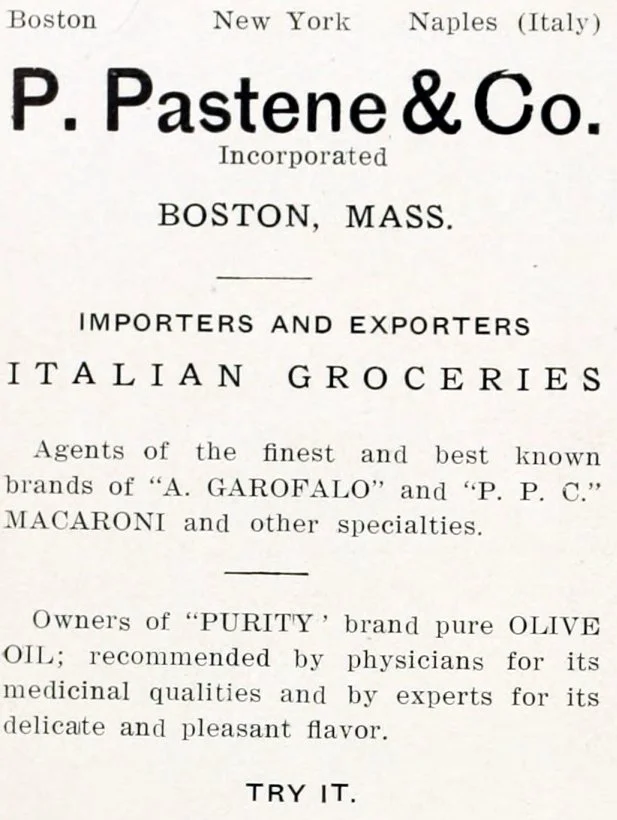
Pastene & Company established themselves at 69 Fulton Street in the North End, later expanding into the New York market and eventually nationwide. They also established an office in Naples, Italy to facilitate their import business. Luigi’s son Pietro would continue to expand the business, becoming the first to distribute California wines.
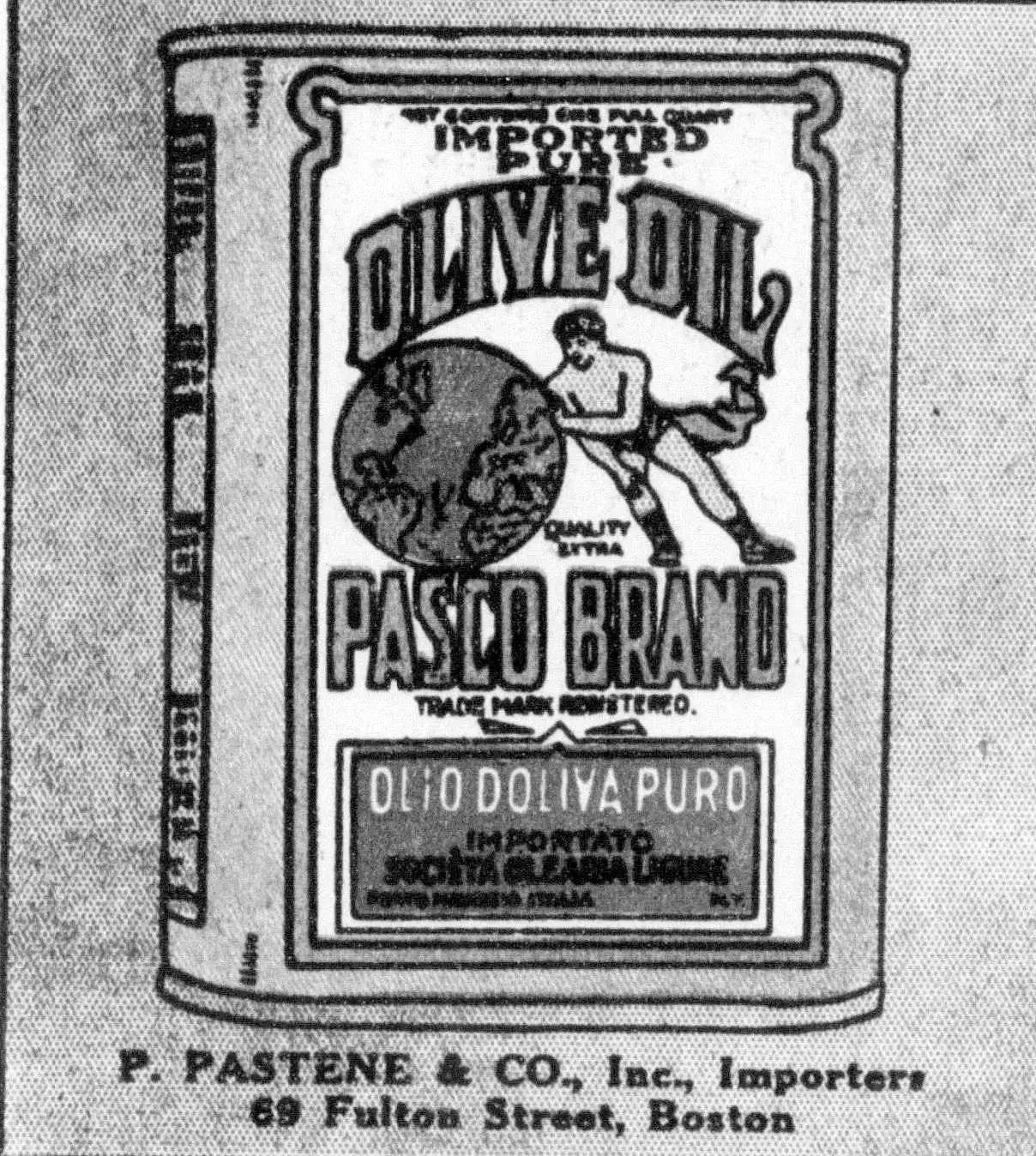
Pietro’s cousins, the Tosi family, took over the business after his death and helped make the brand a household name. In the 1960s Pastene introduced their signature “Kitchen Ready” canned tomatoes, today a staple of national supermarket chains. Six generations later, Pastene still stays true to its North End roots, still family run and now headquartered in Canton, Massachusetts.