
Flavors of the North End: Sweets
Two stories of the North End’s sweet side: how the Italian pasticceria took root, and how Walter Lowney built a chocolate empire in the neighborhood.
Jump to a story: The Pasticceria · Walter M. Lowney
The Pasticceria Arrives in the North End
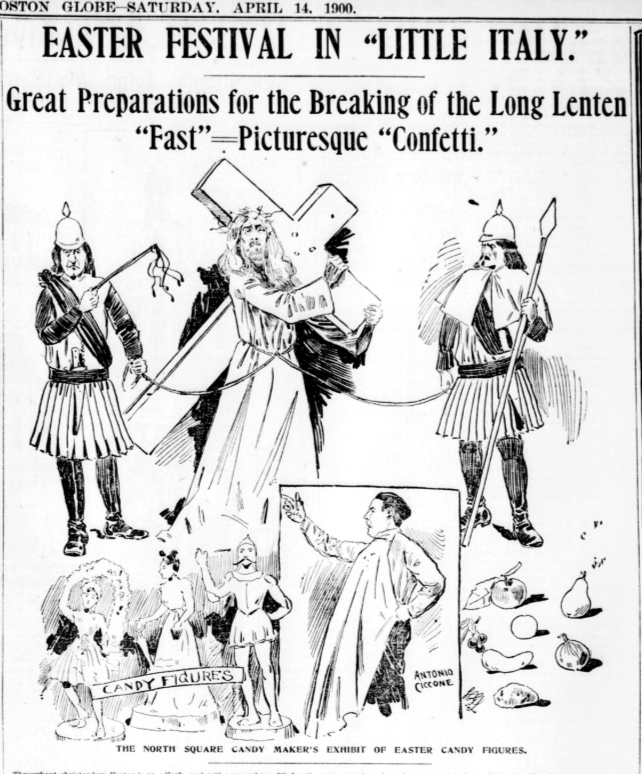
Along the walls run shelves, and on these are placed jars of delicious candied fruit, sugar figures of horsemen, zouaves, “bersaglieri” and dancing girls. Lower come the cakes in heaps and piles, all fragrant with the smell of almonds, and of spice; “moscadine,” pink and white “biscotti,” “pane di spagna,” “cannoli alla Siciliana” and “mostaccioli imbottiti.”
- Boston Herald: April 27, 1902
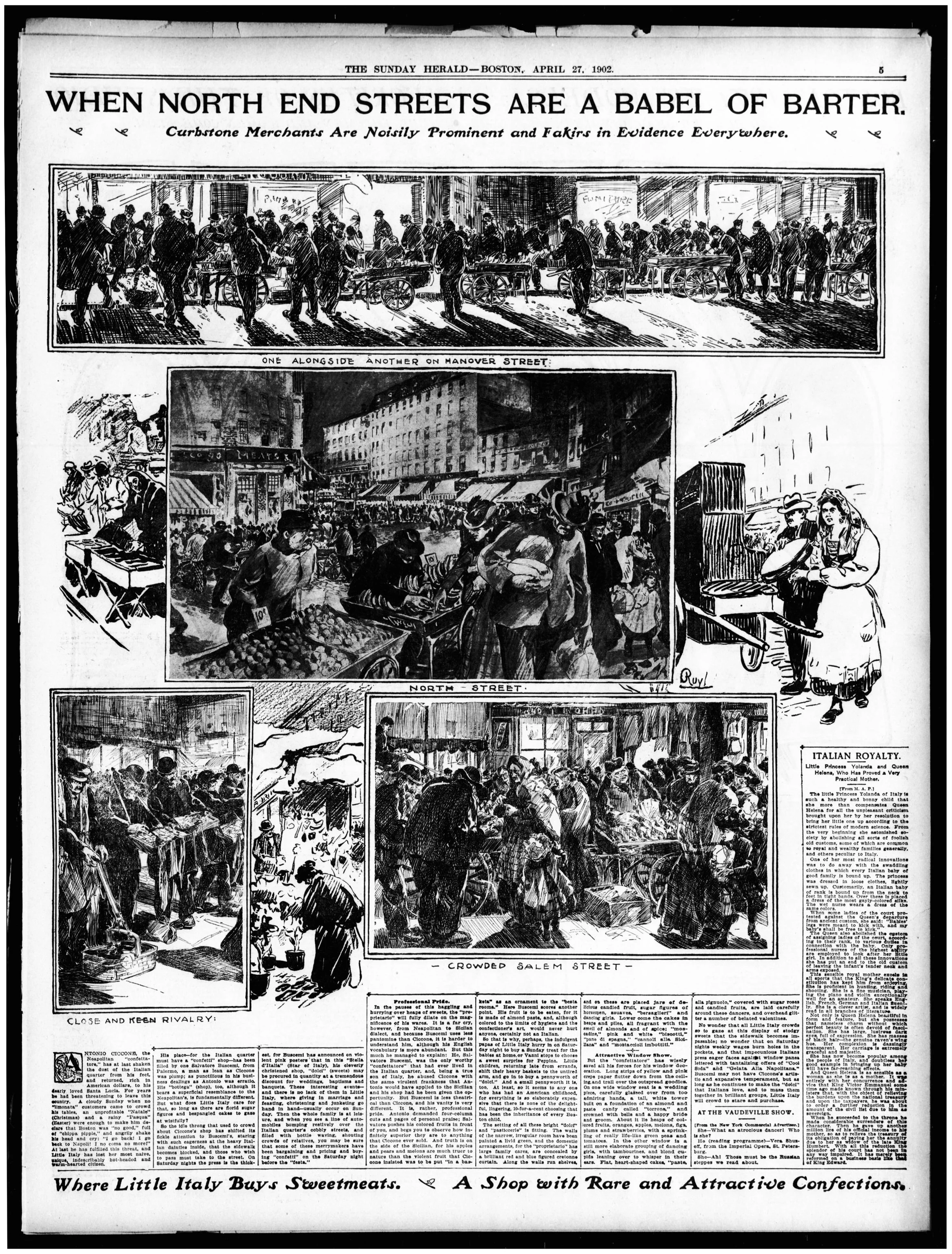
Italian immigrants adapting to this new life, found traditional desserts a fond connection to their past, and also had important social impacts. Weddings, funerals, baptisms, banquets and religious feasts all required the appropriate level of desserts and cookies. Small gatherings could often be handled at home, but for these big events, with the larger community looking on, families bought the best they could afford from the local Pasticceria.
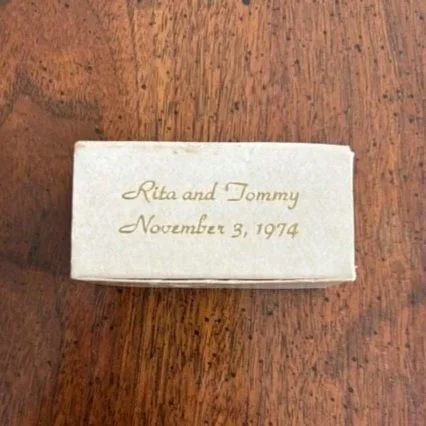
Confettatore is the traditional term for an Italian confectioner of hard candies and the famous candy coated almonds known as confetti (Jordan almonds). Southern Italian confectioners and pastry makers were in the North End by the 1880s according to local advertisements. Some of these entrepreneurs started by making candies at home and sold them among the vendors on Hanover and Salem Streets.
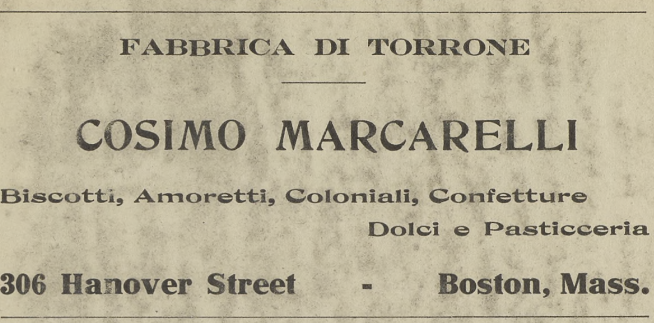
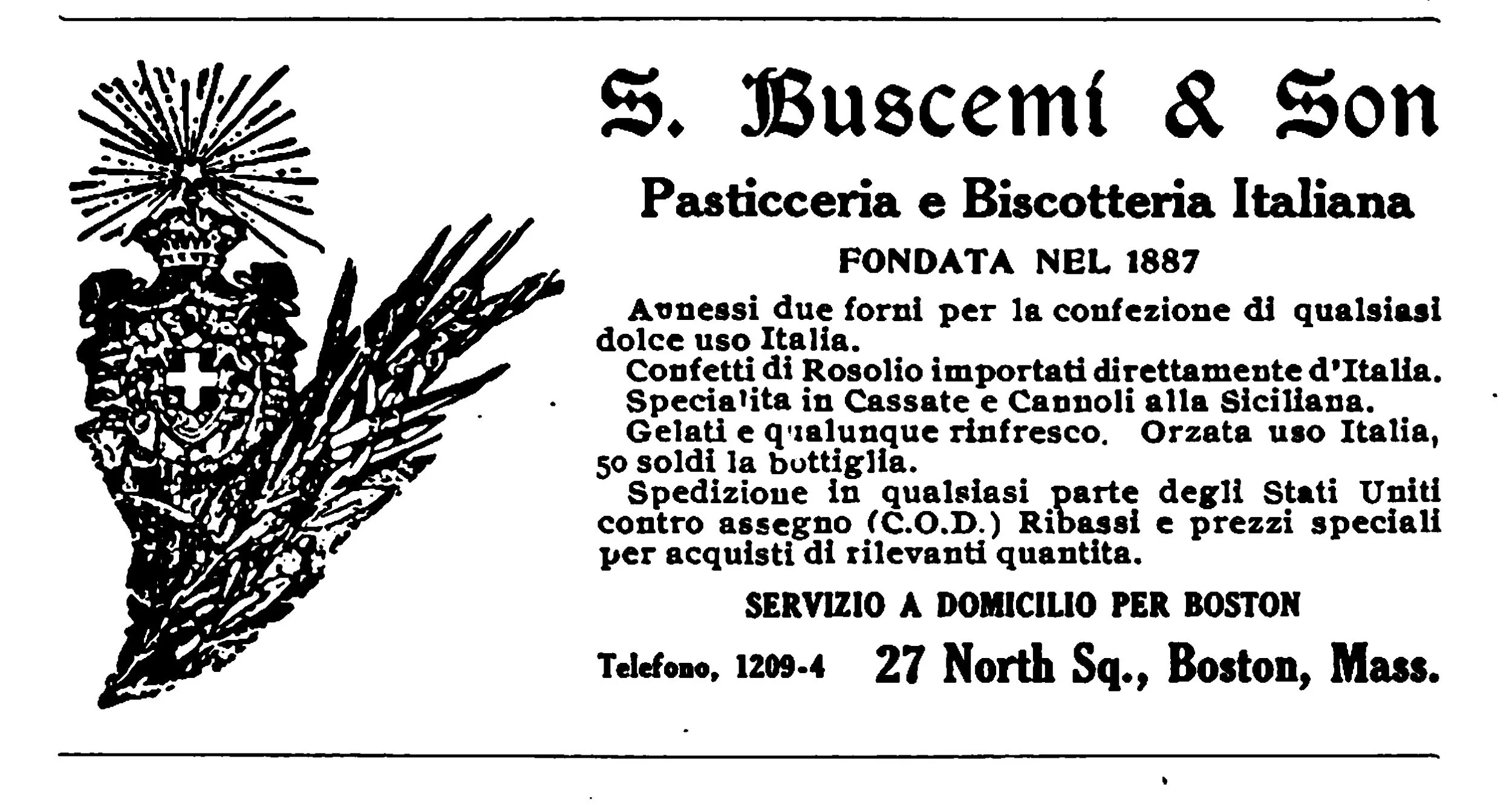
Two of the most successful started as bakeries and Italian groceries in North Square that expanded into pastries and desserts. In 1900 North Square had two confection shops, one was owned by Antonio Ciccone, a Neapolitan, the other by the Buscemi family from Sicily. Both became known for colorful window displays that drew crowds on busy weekends and religious feasts. Hard working immigrants as well as adventurous Bostonians, could now save a little money for some sweet rewards.
Americanization of Italian Desserts
It wasn’t just the meatballs that got bigger here in the North End. Upon arriving in America, more affordable ingredients led to changes in traditional desserts, creating the Italian-American variations on Italian favorites. Another factor was an entirely new market of non-Italians who were now venturing into the North End by the early 1900s to try “exotic” specialties. Naturally, this would lead to adaptations to appeal to a wider audience.
A delicious example is the Neapolitan Sfogliatella. One version grew to enormous size and filled with a sweet cream filling. Thus creating the iconic sub-species known as the Lobster Tail, which is sold side by side with the smaller original version.
When the North End first introduced Boston to cannoli, it was a rare treat only made for Carnevale. Not only did cannoli become an everyday item, they also got larger and sweeter, with less candied fruit and more chocolate. Chocolate and vanilla cream became options beyond the traditional ricotta filling by the turn of the 20th century.
On “Carnevale” (Shrove Tuesday) a cake called “cannoli” is made. There is nothing like it in Little Italy: it is no wonder that Italians bid farewell to “the pomp and vanities of a wicked world” sadly when they think that for 40 long days they can taste “cannoli” no more. Imagine pastry rolled out to the limits of thinness and then rolled and filled with chocolate and vanilla cream, the whole powdered with confectioner’s sugar, and you have about one-tenth of an idea of their delicious taste.
- Boston Herald July 15, 1900
Walter M. Lowney: The Bonbon King of Boston
Walter Lowney is no longer a household name, but he was synonymous with chocolate bonbons. Starting from a small shop in South Boston, Lowney became a candy pioneer and innovator, in a city with a long history of candy and chocolate making. The creation of his North End candy factory in 1898 marked the first big expansion for “Lowney’s”.
Lowney’s became one of the first to mass produce chocolates and cocoa powder. He pioneered the use of climate controlled rooms for candy dipping and packing. The Company won several international awards for their chocolates and by the early 1900s was one of the largest chocolate makers in the world. Their innovative marketing included printing their name on every piece of candy. Their advertising campaigns and competitive pricing also helped Lowney’s get their products in retail drug stores across the country.
Lowney found plenty of workers for the North End factory among the growing Italian-American enclave. This was an important source of employment for young women in the neighborhood, providing steady income for their large families. The Boston papers frequently ran classified ads for Lowney’s, looking for regular and seasonal chocolate dippers and packers. As Lowney’s expanded, the candy making moved out of the North End and the factory focused on making the candy boxes. In 1917 the factory employed 250 North Enders, mostly young Italian-American girls.
The Lowney Chocolate Company’s North End factory operated until 1932, but two of their buildings still exist along Commercial Street. Since the 1940s, they have been part of the United States Coast Guard’s Base Boston.